

Inside The Indie Author: A Conversation with Sandy Schachter

Have you ever considered writing under a pseudonym, and why or why not?
No, part of a legacy I want to leave behind after I die is my name attached to a book that I am very proud of. The internet is forever so when future generations in my family use google to research me, they will find my name and my book, An Unforgotten Heart.
What is your “go-to” method for working through or around writer’s block?
I often clear my head by picking up by needlepoint. As slow as the process is of completing each square I know at the end of an hour I will have accomplished something that will turn out to be beautiful. The repetitiveness of each step gives me a chance to think through my next steps in the process of deciding on where my fingers will go as I type the next chapter.
From your perspective, what are the most important elements of good writing?
When I read a book I look to the characters. Deciding what happens to each of the characters is easy but to get a reader to understand the characters in a story is difficult.
What comes first – the location, the plot, or the characters – and why?
When I was a little girl my mother told me a story each night just as I was about to fall asleep. The story was about a magic egg. As all of chickens in the henhouse stopped laying eggs, the girl made a wish to the few chickens left to please save her family from starvation. The next day there was an egg. When the girls mother cracked open the egg, there was enough yolk to feed the entire family. I believe we are all magic eggs. When you crack us open you get to see who we really are inside and what we are capable of accomplishing. So to answer your question I would have to say the characters are the first focus of any good story. You have to find a way to crack them open and lay it all out for the reader to discover.
What are your least favorite and most favorite things about publishing a book?
My least favorite part of publishing a book is the editing. Grammar is not my strong suit so I’m glad my publisher pitched in to help me. I must have read my book a hundred times before I felt like I caught all the errors. My most favorite part was when the books arrived at my doorstep. Holding something in your hand validates all the blood, sweat and tears I had to shed. My book came alive in my hands - a great feeling.
What is a significant way your book changed from the first to the final draft?
I had no idea I would end up with a book that would end up to be 387 pages. As a reader I don’t like reading books that have long chapters or are more than 400 pages so I was so glad that I was able to meet my self imposed guidelines.
What was the inspiration for your most recent book?
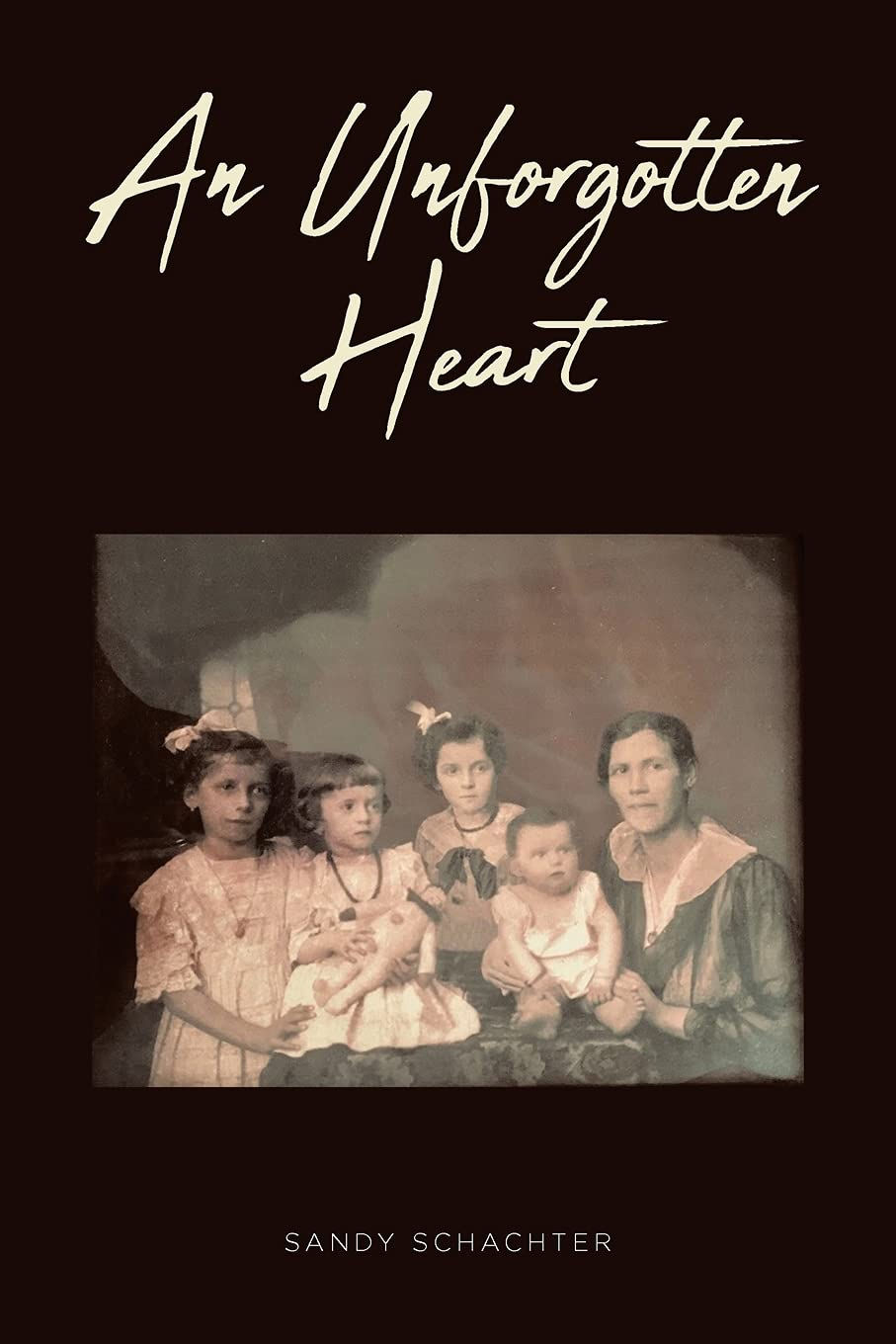
When my mother left Vienna she didn’t take much with her. What I did find after she passed away was an old picture torn at the ends only about 3" x 5". I sent it away to a professional photographer who send me back a picture that was 8"x10" and he filled in all the gaps. I stared at that picture for years until I decided that I would use that picture to start my mother’s story. At first it was just a compilation of all the things my mother told me about her life growing up in Vienna during WW2 but then I discovered that with a little creative thinking I could turn all of her stories into a book.
What is a “darling” you’ve killed in a book that you’d like to resurrect in a future book?
Perhaps the hardest chapters I wrote in my book was the one in which my Aunt and my grandmother were captured and taken to Auschwitz. I wish with all of my heart I could have given them a better ending.
Where are your most productive writing spaces, and what elements are important about that space to keep you focused on writing.
I write in a small room surrounded by little slips of post-its that help me keep track of my characters. It’s just me, the post-its, my laptop and my memories of my childhood. I send my husband out on long walks so he won’t disturb me. I usually write for about four hours at a time.
If you were to give one of your side characters a novella of their own, who would it be, and why do you think they need their own story?
While writing my book I discovered a character named Dieter. He was an Austrian who joined the resistance. He established himself as a Nazi soldier but he worked very hard to free as many Jews from being captured. In spite of the horror he witnessed he had a sense of humor. He was self-assured, brave, and committed to helping others. He wasn’t Jewish. He was friends with one of the main characters named Serule. Dieter saved people not because they were Jewish, he saved them because he cared about people. When I cracked him open, I found a hero.
What risks have you taken with your writing that made the book better?
At first I wrote the book only for myself and my daughter. All I wanted was to record by mother’s memory before I passed away. Then one day I sent the chapters to a publishing company. They agreed to publish the book. So I want back into the book and fine tuned it to be interesting to anyone who read the book, not just my friends and family.
What’s the best monetary investment you’ve ever made with regard to your writing practice?
My publisher connected me with a screenwriter. He and I collaborated on the development of a screenplay. It was exhilarating and scary. It is very difficult to take a 387 page book and convert it to a 120 page screenplay. Yet the process helped me define the themes and element of the book that were important to me.
When you first began writing, what was a common procrastination trap you encountered, and how did you overcome it?
I’m not sure why this happened but I never found a reason to procrastinate other than being physically or emotionally tired. When I was physically tired, I grabbled a cup if tea and took a walk. When I was emotionally tired, I had a good cry. As much as I enjoyed being able to remember the stories my mother told me I found that with each chapter in the book I just missed her more and more.
What is your writing software of choice, and what is its best feature?
I used google docs. I like it better than Word.
Do characters’ names come immediately to you? Do you add them in a final draft? Where do you find names, and how do you make a final decision about the names you’ll use?
The names of the main characters in the story are their real names. I decided not to change them so that I wouldn’t be confused about their characters as I wrote the story. The rest of the names I used were based on the most popular names for that era. (Based on a Google search). Perhaps the hardest names I had to come up with were the names of two sisters, Margot and Gerda. In my head I knew who these girls would grow up to be so I had to think of names for them that would be fitting to the people they would become, not the girls they were in the beginning of the story.
Tell us the title of one of your favorite novels, and why this book is a favorite.
I love all of the Agatha Christie novels. I love a murder mystery. I also love Jane Austin. Things start out tragic but somehow either the killer is discovered or the girls find happiness with their rich husbands.
If you could take on the identity of a character in one of your favorite books for twenty-four hours and retain the memory of that experience, which character would you choose? Tell us the title, author, character name, and why you would want to be that character.
I would love to live in St. Mary Meade in England as Miss Marple (novels by Agatha Christie). She has her nose in everybody’s business, she has a keen sense of awareness. She sees the clues others miss and she’s never wrong. As an older person she is overlooked and ignored yet her reputation as a super sleuth is well respected. She knows exactly who to interrogate and what questions to ask. She doesn’t fumble at all and is self-assured. She has friends where ever she goes.
If you could save five books from being destroyed in the apocalypse, what books would you choose, and why?
The Torah - it is the record of my people.
The Diary of Anne Frank - to see the world through the eyes of a child is worth saving.
Moby Dick - man and nature in a battle for survival.
The Lord of the Rings - we are all on a quest to conquer evil. Finally,
William Shakespeare’s Romeo and Juliet - it’s all about love.
What are the titles and genres of each book you’ve written?
An Unforgotten Heart, Historical Fiction
How can readers find you? Website, social media, amazon author page… share all the links!
Comments